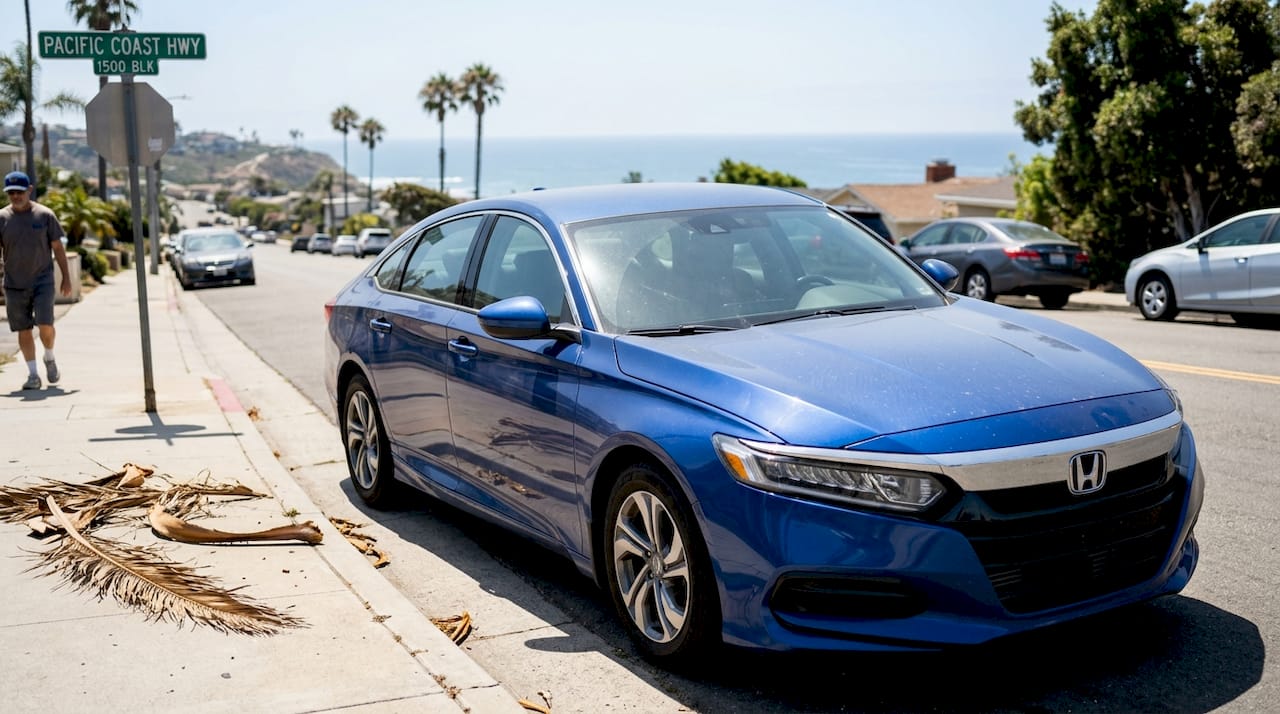
Prevent Sun Damage to Your Car's Paint in San Diego
Prevent Sun Damage to Your Car’s Paint in San Diego
TL;DR:
- San Diego’s high UV and salt air accelerate car paint degradation faster than milder climates.
- Protective coatings like ceramic are essential for long-term paint preservation in harsh environments.
- Early detection and professional correction help prevent costly, irreversible paint damage.
Even a brand-new car can start showing faded, dull paint after just one San Diego summer. That’s not an exaggeration. The combination of intense UV radiation, salty ocean air, and nearly year-round sunshine creates conditions that are genuinely hostile to automotive paint. Many vehicle owners assume that regular washing is enough to keep their car looking sharp, but washing alone doesn’t stop UV rays from breaking down your paint’s protective layers. This article explains exactly why San Diego is so tough on car paint, what the damage process looks like from start to finish, which common protection strategies fall short, and what you can actually do to keep your vehicle’s finish in top condition for years to come.
Table of Contents
- Why San Diego sun is especially harsh on car paint
- How sun damage happens: Fading, oxidation, and clear coat failure explained
- Common myths about sun and car paint protection
- Best practices: Preventing and reversing sun damage in San Diego
- Warning signs: When to get professional help
- Why most San Diego car owners underestimate sun damage risk
- Protect your car with professional care in San Diego
- Frequently asked questions
Key Takeaways
| Point | Details |
|---|---|
| San Diego sun accelerates paint damage | Constant high UV and salty coastal air cause car paint to fade and degrade much faster than in other regions. |
| Early prevention is crucial | Acting before visible damage appears saves money and maintains your car’s value long-term. |
| Pro-grade coatings are best | Ceramic coatings and professional detailing give your paint the strongest defense against relentless sun exposure. |
| Know when to seek experts | If your clear coat is chalky or peeling, only professional paint correction can restore your car’s finish. |
Why San Diego sun is especially harsh on car paint
San Diego is one of the sunniest cities in the United States, averaging over 266 sunny days per year. That sounds like a perk, but for your vehicle’s paint, it’s a real problem. The UV index in San Diego often rates as “very high” on most days during summer, which means your car’s exterior is absorbing a significant amount of ultraviolet radiation every single day it sits outside.
UV rays work against paint in a specific way. They break down the chemical binders inside the clear coat and color layers, causing the paint to lose its ability to reflect light evenly. The result is gradual fading, dullness, and eventually surface degradation that no amount of washing can reverse. This process is slow at first, which is exactly why so many owners don’t notice it until the damage is already significant.
But UV exposure is only part of the problem. San Diego’s proximity to the Pacific Ocean means your car is also regularly exposed to salt-laden air. Salt accelerates corrosion on metal surfaces and can etch into paint when it combines with moisture and heat. Add in common urban contaminants like bird droppings, tree sap, and industrial fallout, and you have a cocktail of damaging agents working on your paint simultaneously.
Here’s what makes San Diego’s environment particularly aggressive for car paint:
- High UV index rated “very high” for most of the summer season
- Salt air exposure from ocean proximity that accelerates surface etching
- Extended sun season with minimal cloud cover compared to most U.S. cities
- Temperature swings between coastal mornings and inland afternoon heat
- Urban pollutants that bond with UV-weakened paint and cause chemical etching
Regular car washing removes surface dirt, but it does nothing to block UV radiation or neutralize salt deposits embedded in the paint surface. Learning safe car washing techniques is a good start, but washing is maintenance, not protection.
“Sun exposure in San Diego leads to 30-50% faster paint degradation than in mild climates, making protective coatings a necessity rather than a luxury for local vehicle owners.”
That acceleration in damage rate is what separates San Diego from cities with more moderate climates. What might take five or six years to show in Seattle or Portland can appear in two to three years here. Understanding that gap is the first step toward taking your paint protection seriously.
How sun damage happens: Fading, oxidation, and clear coat failure explained
Now that you understand why San Diego is so tough on paint, here’s what actually happens to your vehicle’s finish under constant sun. Modern automotive paint is built in layers, and each layer serves a specific purpose. Understanding this structure helps you recognize damage early.
Your car’s paint system generally consists of three main layers:
- Primer — bonds to the metal body and provides corrosion resistance
- Color coat — contains the pigment that gives your car its visible color
- Clear coat — a transparent protective layer that shields the color coat and provides gloss
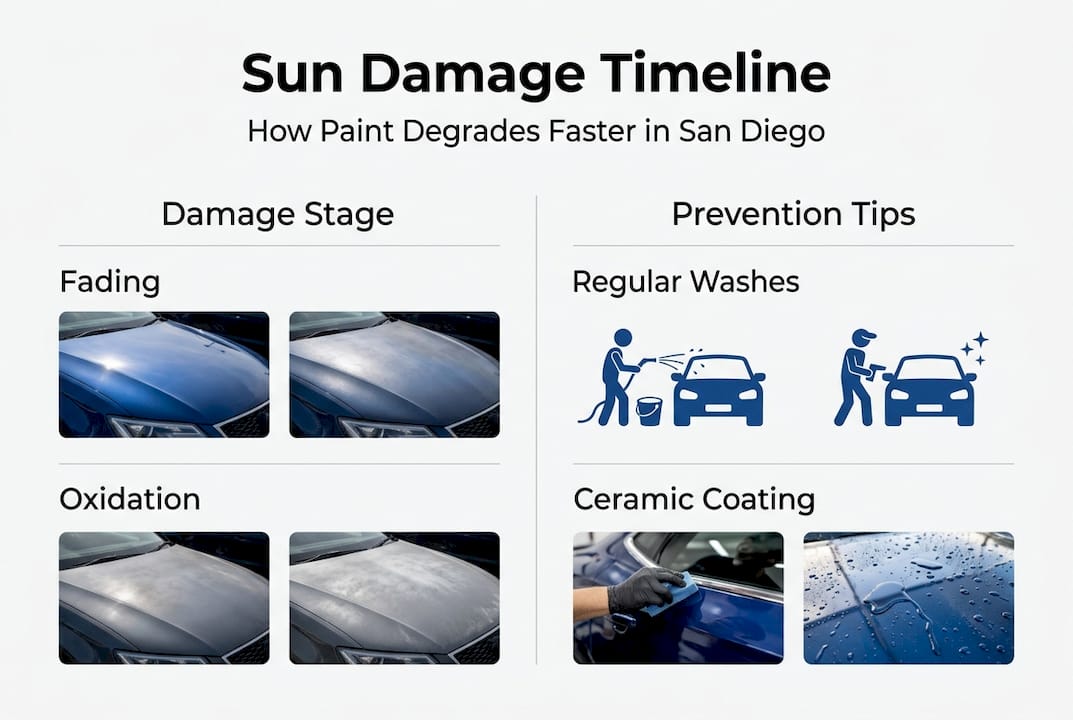
The clear coat is your first line of defense, and it’s the first to suffer under UV exposure. UV radiation is the primary cause of color fading and oxidation in automotive paint. Here’s how the damage progresses in stages:
- UV absorption begins — Clear coat absorbs UV rays and starts breaking down at the molecular level. No visible signs yet.
- Micro-oxidation forms — The clear coat loses flexibility and begins to oxidize. Paint may look slightly less glossy.
- Color fading appears — UV reaches the color layer, causing pigments to break down. Paint looks washed out or uneven.
- Chalky oxidation develops — The surface becomes rough and dull with a powdery texture. This is visible oxidation.
- Clear coat failure — Peeling, bubbling, or cracking appears. The color coat is now exposed and unprotected.
- Irreversible damage — Without intervention, the base metal becomes vulnerable to rust and structural corrosion.
Here’s a comparison of how quickly each stage can appear in San Diego versus a milder climate:
| Damage stage | San Diego timeline | Mild climate timeline |
|---|---|---|
| Micro-oxidation | 6 to 12 months | 2 to 3 years |
| Visible fading | 1 to 2 years | 3 to 5 years |
| Chalky oxidation | 2 to 4 years | 5 to 8 years |
| Clear coat failure | 4 to 6 years | 8 to 12 years |
The key takeaway is that catching damage at stage one or two is far easier and less costly to address than waiting until stage five or six. Early signs include a slight loss of gloss, paint that looks “flat” in direct sunlight, or a surface that feels rough when you run a clean finger across it. If you notice any of these, it’s time to act. Exploring the paint correction process gives you a clearer picture of what professional restoration involves at each damage stage.
Common myths about sun and car paint protection
Many car owners try to fight sun damage based on what they’ve heard, but let’s separate fact from fiction. Several widely held beliefs about paint protection are not just ineffective in San Diego’s climate, they can actually give you a false sense of security that delays real action.
Myth 1: Waxing every few months is enough in SoCal sun.
Traditional carnauba wax feels great to apply and gives a beautiful short-term shine, but it degrades quickly under intense UV exposure. Regular waxing does not provide sufficient UV protection for extended San Diego exposure. Wax typically lasts four to eight weeks before it breaks down, leaving your paint unprotected for the majority of the year.
Myth 2: Light-colored cars don’t need as much UV protection.
White and silver cars may show less visible fading than dark-colored vehicles, but UV damage affects the clear coat regardless of the color underneath. The clear coat on a white car degrades just as fast as on a black one. Oxidation and peeling are equal-opportunity problems.
Myth 3: Parking in the shade eliminates all risk.
Shade reduces direct UV exposure, but reflected UV from surrounding surfaces, ambient heat, and indirect light still reach your paint. Shade also doesn’t protect against salt air, bird droppings, or tree sap, which can cause chemical etching even without direct sunlight.
Here’s a clear comparison of how the three main protection options stack up:
| Protection type | UV resistance | Durability | Hydrophobic effect | Cost level |
|---|---|---|---|---|
| Carnauba wax | Low | 4 to 8 weeks | Minimal | Low |
| Paint sealant | Moderate | 6 to 12 months | Moderate | Moderate |
| Ceramic coating | High | 2 to 5+ years | Strong | Higher upfront |
Understanding ceramic coating value helps put that higher upfront cost in perspective when you consider how much it saves in long-term paint repair.
Additional factors that compound paint damage when relying only on myths:
- Bird droppings left on waxed surfaces still etch through within hours in San Diego heat
- Automatic car washes strip wax faster than hand washing
- UV damage accumulates even on overcast days because UV rays penetrate cloud cover
Pro Tip: Layering protection works better than relying on a single product. A paint sealant applied under a ceramic coating creates multiple barriers against UV, chemical etching, and environmental contamination. This stacked approach is especially important for vehicles that spend most of their time outdoors in San Diego.
Best practices: Preventing and reversing sun damage in San Diego
With the myths out of the way, here’s what experts actually recommend for effective protection and restoration in San Diego. Whether your car is brand new or already showing early signs of wear, these steps give you a clear path forward.
- Wash and dry properly. Use a pH-neutral car shampoo and a microfiber wash mitt. Rinse thoroughly to remove salt deposits, especially after driving near the coast. Dry with a clean microfiber towel to prevent water spots.
- Inspect your paint regularly. Run a clean hand across the surface after washing. Roughness or a gritty feel indicates contamination that needs clay bar treatment before any protection is applied.
- Apply and maintain a ceramic coating. Ceramic coatings provide the highest long-term protection against UV-induced paint degradation. A professionally applied coating bonds to the clear coat and creates a durable, hydrophobic layer that repels water, salt, and UV radiation.
- Schedule regular professional detailing. Even with a coating in place, routine detailing removes bonded contaminants and keeps the protective layer performing at its best.
- Address damage early. If you notice dullness or light oxidation, don’t wait. Early-stage damage responds well to paint correction, which restores gloss without requiring a full repaint.
Store-bought spray waxes and quick-detailer products are convenient, but they simply aren’t formulated to withstand San Diego’s UV intensity for more than a few days at a time. They work as a temporary refresh between professional services, not as a primary protection strategy.
For new cars, applying ceramic coating protection immediately after purchase is the smartest move. You’re protecting a factory-fresh surface before any UV damage begins. For older vehicles showing early wear, a professional assessment helps determine whether paint correction is needed before a coating is applied.
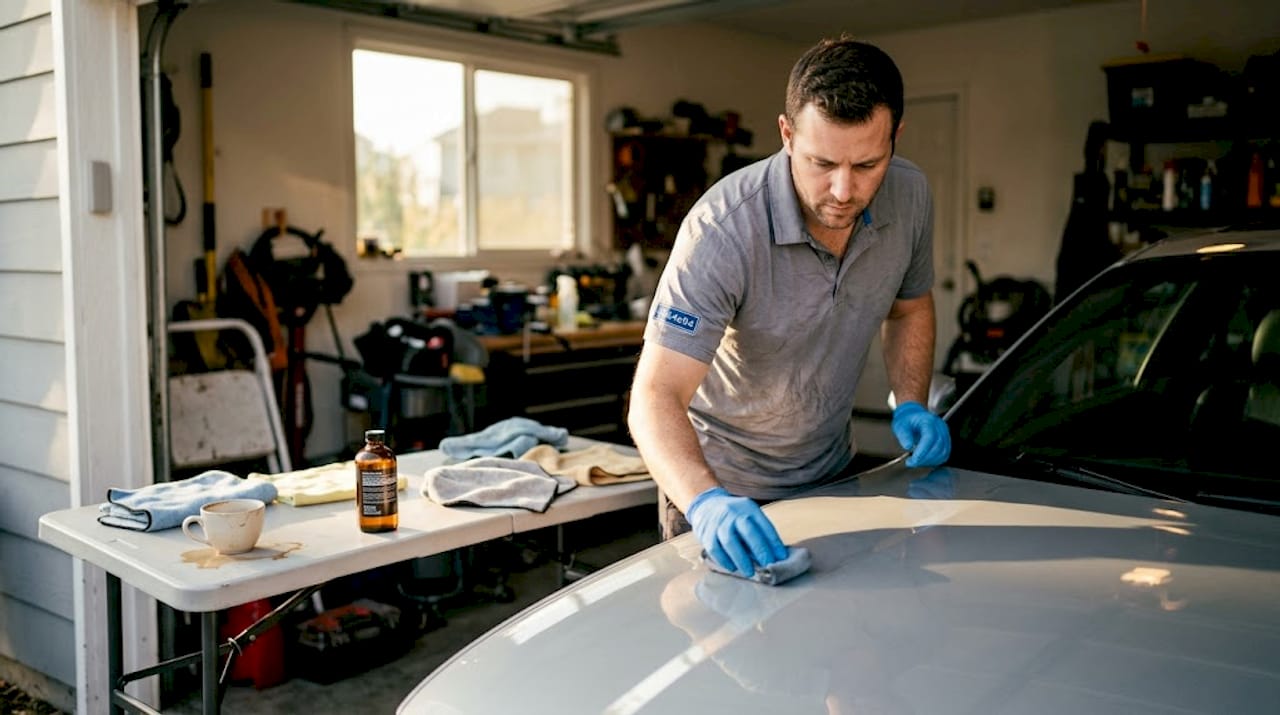
Pro Tip: Schedule a professional detailing service at the start of summer and again in early fall. These two windows align with San Diego’s peak UV season and give your paint the best chance of staying protected through the most damaging months of the year. Pairing this with professional exterior detailing ensures your vehicle is clean, decontaminated, and ready for coating maintenance.
Consistent maintenance keeps your paint looking newer for longer and directly supports your vehicle’s resale value. A car with well-maintained paint commands a noticeably higher price at trade-in or private sale.
Warning signs: When to get professional help
Even with good habits, sometimes paint damage advances too far. Here’s how to know when expert care is the best option.
Some damage is well within the range of careful DIY maintenance. Other damage requires professional tools, products, and expertise that simply can’t be replicated at home. Knowing the difference saves you time, money, and the risk of making things worse.
“Once the clear coat is visibly peeling or chalky, only professional correction can restore appearance and prevent further damage.”
Here’s a practical guide to what you can handle at home versus when to call in a professional:
Safe for at-home action:
- Light surface dirt and dust removal with proper washing technique
- Minor water spots treated with a dedicated water spot remover
- Applying a spray sealant or wax as a short-term top-up between professional services
- Removing fresh bird droppings or tree sap quickly with a detailer spray
When to see a specialist:
- Chalky or powdery texture that doesn’t improve after washing
- Visible discoloration, deep fading, or uneven color across panels
- Clear coat that is peeling, cracking, or showing bubbles
- Paint that feels rough even after a thorough clay bar treatment
- Any damage that covers more than a small, isolated area
Professional paint correction uses machine polishing to remove a controlled, thin layer of the clear coat, eliminating oxidation and surface defects. This process restores gloss and prepares the surface for a fresh protective coating. Attempting this without the right equipment can cause swirl marks, uneven correction, or accidental burn-through of the clear coat.
Early intervention matters enormously. A vehicle brought in at stage two or three of the damage lifecycle typically requires a single-stage correction and a coating application. A vehicle at stage five may need multi-stage correction or, in severe cases, a panel repaint. The paint correction service we offer is designed to meet vehicles at whatever stage they’re at and restore as much of the original finish as possible.
The cost difference between early correction and late-stage repair is significant. Acting at the first signs of dullness or oxidation is always the more economical choice.
Why most San Diego car owners underestimate sun damage risk
After outlining the warning signs, here’s an honest look at why so many locals misjudge the risks and what actually works for lasting protection.
There’s a cultural tendency in Southern California to associate the mild, sunny climate with easy living, and that mindset extends to car care. The logic goes: the weather is gentle, so my car doesn’t need much attention. The reality is the exact opposite. The very conditions that make San Diego so livable for people are what make it so aggressive for automotive paint.
We regularly see vehicles come in for the first time after visible damage has already set in. The owners are often surprised. They washed their car consistently. They parked in the garage when they could. But they didn’t have a protective coating, and San Diego’s UV did its work quietly over one or two years.
The most important insight we’ve gained from working with San Diego car owners is that the biggest risks are cumulative and invisible at first. You don’t see the clear coat degrading at the molecular level. You don’t notice the fading until it’s already significant. By the time most people recognize there’s a problem, the easy and inexpensive window for prevention has closed.
Visiting our detailing stories gives you a real sense of how quickly things can change and what consistent protection actually looks like over time. The owners who invest in protection early are the ones who never have to face a costly correction later. Prevention is always the smarter, cheaper, and less stressful path.
Protect your car with professional care in San Diego
So, if you’re ready to keep your vehicle looking its best, here’s how to take the next step toward real protection.
San Diego’s climate demands more than occasional washing and a coat of wax. It requires a protection strategy built specifically for high UV exposure, salt air, and year-round sunshine. That’s exactly what we specialize in at Severin Detailing.

Whether your car is fresh off the lot or already showing early signs of sun damage, we have the right solution. Our ceramic coating specialists apply professional-grade coatings that bond to your paint and deliver years of UV protection, hydrophobic performance, and lasting gloss. For vehicles that need restoration first, our paint correction services bring dull, oxidized finishes back to life before a coating is applied. We come to you, whether that’s your home or office, anywhere in San Diego County. Ready to get started? Book mobile detailing today and give your vehicle the protection it deserves.
Frequently asked questions
How fast can sun damage car paint in San Diego?
Noticeable fading or dullness can appear within 6 to 12 months due to San Diego’s high UV exposure. Paint degradation here occurs 30 to 50% faster than in milder climates, making early protection essential.
Is ceramic coating really worth it for sun protection?
Yes. Ceramic coatings provide the highest long-term UV protection available and last significantly longer than wax or sealant, making them the most cost-effective choice for San Diego’s sun.
What signs mean my car needs professional paint correction?
Look for a chalky or powdery surface, visible peeling, or bubbles in the clear coat. Once peeling appears, only professional correction can restore the finish and stop further damage.
Can I just park in the shade to avoid sun damage?
Shade reduces direct UV exposure but doesn’t eliminate the risk. Reflected UV, ambient heat, and environmental contaminants still reach your paint, so additional UV protection is always necessary in San Diego.