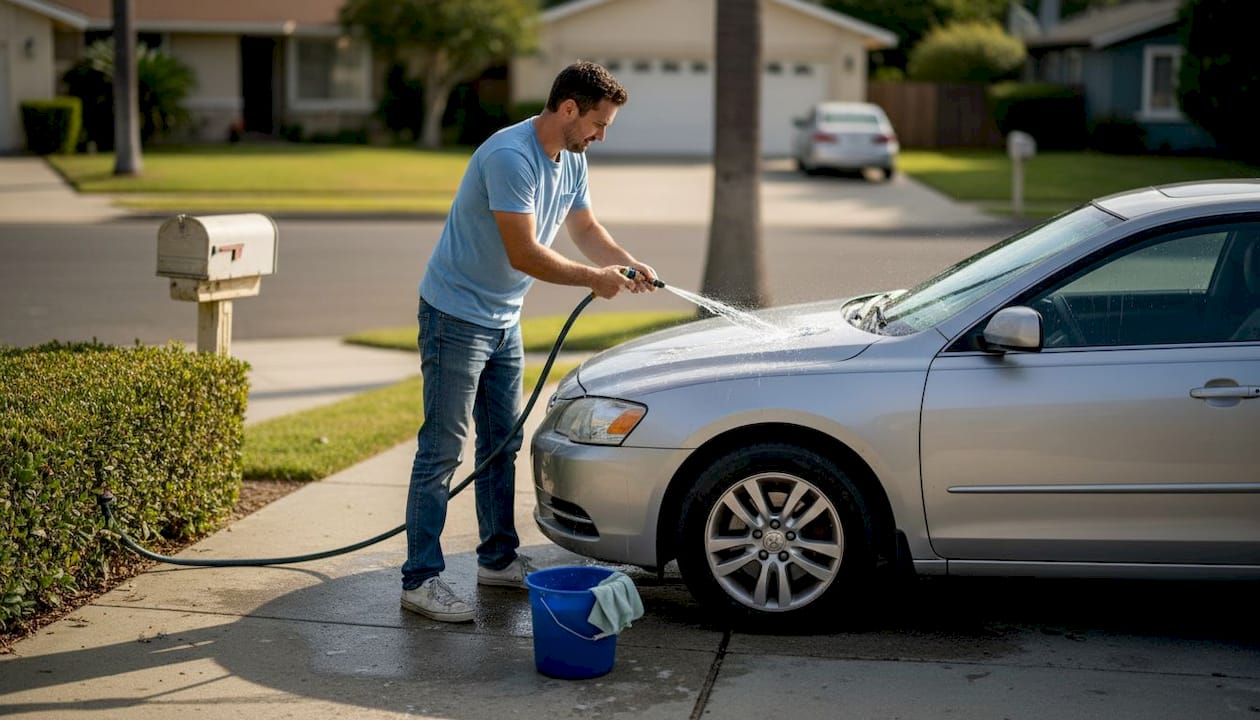
How to wash your car exterior safely: San Diego guide
How to wash your car exterior safely: San Diego guide
TL;DR:
- Proper car washing in San Diego requires using pH-neutral soap, two buckets, and microfiber tools to prevent paint damage.
- Frequent, gentle washes weekly or biweekly are essential to protect paint from salt, pollen, and environmental contaminants.
- Professional mobile detailing offers superior protection and convenience, especially for coastal vehicle owners.
Salt air rolls in off the Pacific, pollen coats every surface by March, and a single beach trip can leave your paint looking like it aged a year overnight. San Diego’s coastal environment is genuinely tough on vehicle exteriors, and most car owners underestimate how quickly accumulated grime turns into corrosion, faded clear coat, and lost resale value. Washing your car correctly is not just about appearances. It is about protecting a significant financial investment. This guide walks you through the right tools, a proven step-by-step method, ideal wash frequency for San Diego conditions, and the most common mistakes that silently damage your paint.
Table of Contents
- Gather the right tools and materials
- Step-by-step guide to washing your car exterior
- How often should you wash your car in San Diego?
- Avoiding common mistakes and troubleshooting problems
- Our hard-won lessons from San Diego detailing
- Upgrade your car care with professional mobile detailing
- Frequently asked questions
Key Takeaways
| Point | Details |
|---|---|
| Use safe washing tools | Always start with pH-neutral soap and microfiber towels to protect your car’s finish. |
| Follow proper technique | Hand washing with a two-bucket method prevents micro-scratches and paint damage. |
| Wash frequently in coastal areas | Weekly exterior cleaning is recommended in San Diego to combat salt air and pollutants. |
| Avoid common mistakes | Never wash your car with household detergents or in direct sunlight to prevent damage. |
| Consider professional detailing | Mobile detailing brings expert results and lasting protection, especially for busy San Diego drivers. |
Gather the right tools and materials
Now that you know why proper washing matters, let’s start with assembling the right gear. Using the wrong supplies is one of the fastest ways to scratch your paint without realizing it. A rough sponge or a single bucket of soapy water might look harmless, but the damage adds up quickly.
Here are the must-have items for a safe, effective hand wash:
- pH-neutral car wash soap: Household dish soap strips protective wax and degrades your clear coat over time. Always use a soap formulated specifically for automotive paint.
- Two buckets: One for soapy water, one for rinsing your mitt. This two-bucket method keeps dirt from cycling back onto your paint.
- Grit guards: These plastic inserts sit at the bottom of each bucket and trap dirt particles below the waterline, so your mitt stays clean between passes.
- Microfiber wash mitt: Softer and more paint-safe than sponges or terrycloth. The fibers lift and trap dirt rather than dragging it across the surface.
- Microfiber drying towels: Large, plush towels absorb water without scratching. Avoid chamois leather, which can drag on dry paint.
- Wheel brush and separate mitt: Wheels carry brake dust and road grime that you never want transferring to your paint panels.
- Hose or pressure washer (low setting): A strong rinse removes loose contaminants before you ever touch the surface.
| Supply type | Store-bought kit | Professional-grade |
|---|---|---|
| Soap | Basic pH-neutral formula | High-lubricity, foam-boosted formula |
| Wash mitt | Standard microfiber | Thick-pile chenille microfiber |
| Drying towel | Thin microfiber | Waffle-weave or plush twist-loop |
| Grit guards | Often excluded | Included or recommended |
| Cost range | $20 to $40 | $60 to $120+ |
Store-bought kits work for regular maintenance, but professional-grade materials reduce the risk of micro-scratches significantly. For exterior car detailing, professionals use premium supplies that most consumers simply do not have at home.
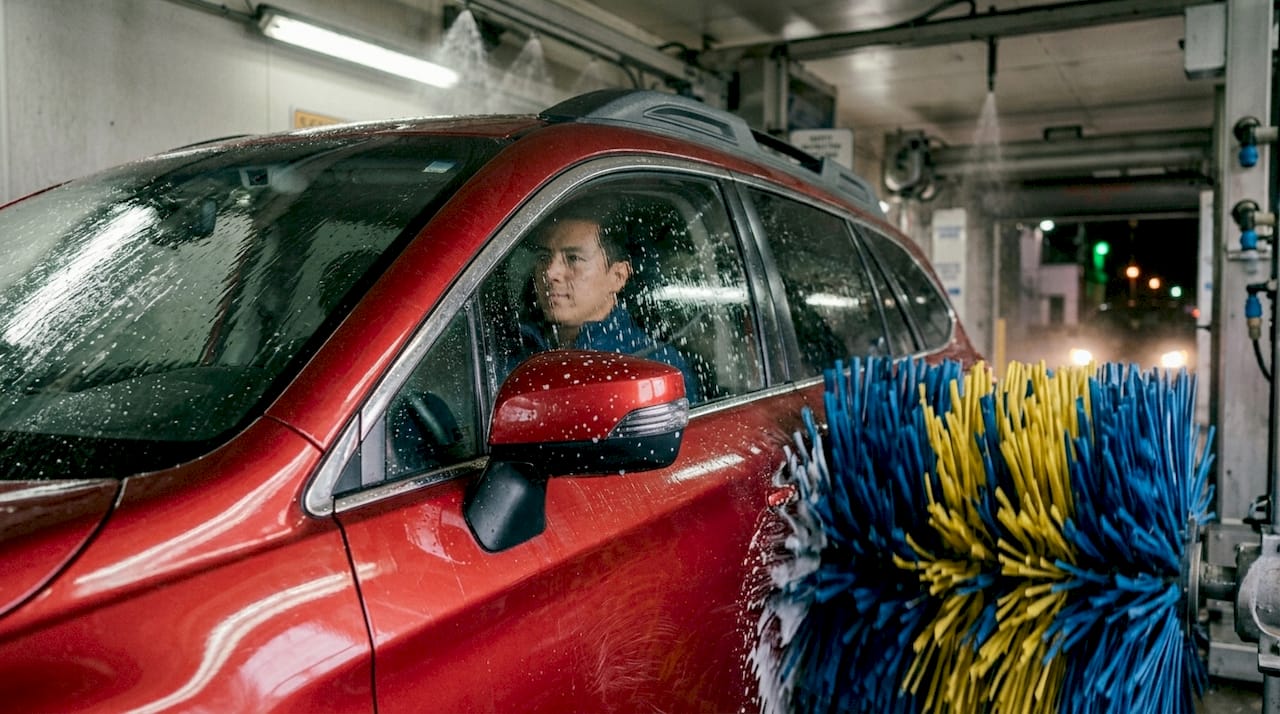
Automated brush washes are especially damaging. Drive-thru brush washes can cause 20 to 40 micro-scratches per square inch, which accumulate into visible swirl marks over time.
Pro Tip: If you live near the coast in areas like La Jolla, Ocean Beach, or Coronado, rinse your vehicle with fresh water even on days when it looks clean. Salt deposits are often invisible but actively corrode metal and degrade paint.
Step-by-step guide to washing your car exterior
With your supplies ready, here’s exactly how to tackle every wash safely. Sequence matters more than most people realize. Skipping steps or rushing the process is where most paint damage actually happens.
- Rinse the entire vehicle first. Use a hose or pressure washer on a low setting to knock off loose dirt, salt, and debris. Start from the roof and work down. This pre-rinse prevents dragging abrasive particles across the paint during washing.
- Wash wheels and tires separately. Use your dedicated wheel brush and a separate bucket. Brake dust is highly abrasive and corrosive. Cleaning wheels first prevents contamination from splashing onto clean paint panels.
- Apply a pre-wash or foam if available. A foam pre-wash loosens stubborn grime before your mitt ever contacts the surface, reducing friction and scratch risk.
- Use the two-bucket method. Dip your mitt into the soapy bucket, wash one panel at a time using straight back-and-forth strokes (never circular motions), then rinse the mitt in your clean water bucket before reloading with soap.
- Work from top to bottom. Roof first, then windows, hood, trunk, doors, and finally lower panels. Lower panels carry the most dirt.
- Final rinse. Rinse thoroughly from top to bottom, making sure all soap is removed from panel gaps, mirrors, and trim.
- Dry immediately. Use a large microfiber drying towel or a blower to remove water before it evaporates and leaves spots.
Safety note: Never wash your car in direct sunlight. Heat causes water and soap to evaporate rapidly, leaving behind mineral deposits and soap residue that bond to your paint and are difficult to remove.
| Wash method | Paint safety | Wax preservation | Time required |
|---|---|---|---|
| Hand wash (two-bucket) | Excellent | High | 45 to 60 min |
| Touchless automatic | Good | Moderate | 5 to 10 min |
| Drive-thru brush wash | Poor | Low | 5 to 10 min |
| Mobile professional detail | Excellent | High | 60 to 90 min |
Hand washing remains the safest method for preserving your paint, and pairing it with professional exterior car detailing periodically keeps your finish in top condition.
Pro Tip: Always wash wheels and tires first, before touching any painted surface. The grime and brake dust on wheels is some of the most abrasive material on your vehicle.
How often should you wash your car in San Diego?
Now, let’s consider how frequently you should repeat these steps for maximum benefit. San Diego’s environment is not uniform. Where you live and how you use your vehicle both affect how quickly contaminants build up.
Here is a practical breakdown:
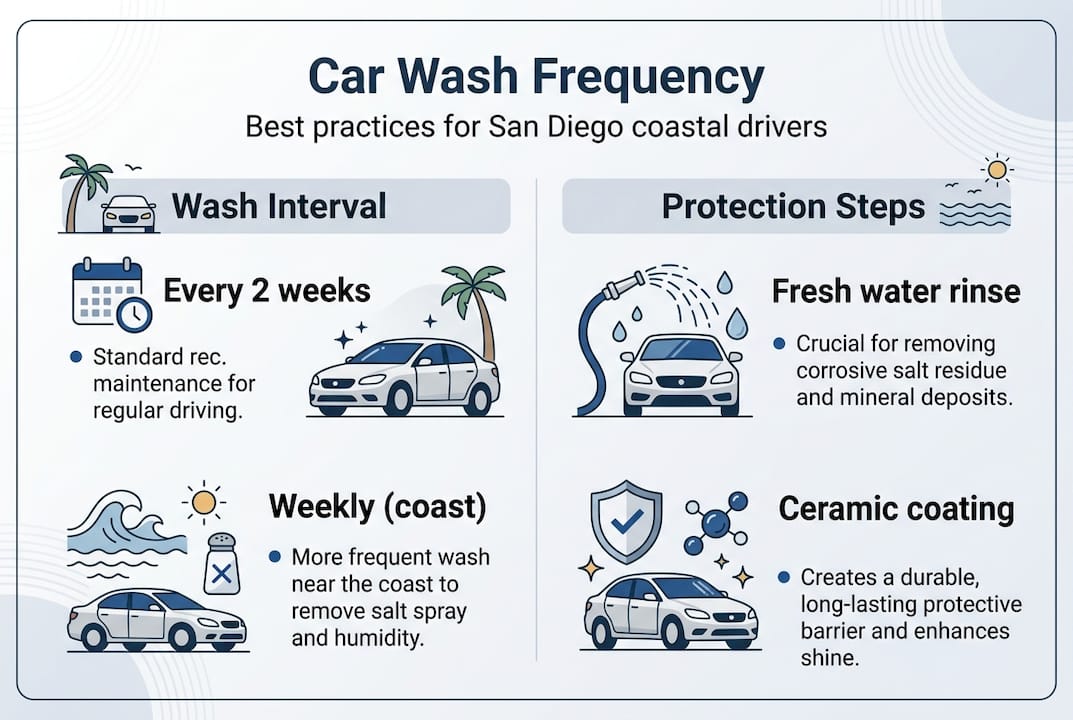
- Weekly washes: Recommended if you live within a few miles of the coast, park outdoors, take regular beach trips, or drive through areas with heavy pollen or bug activity. Salt air deposits are invisible but relentless.
- Every two weeks: Appropriate for inland San Diego areas such as El Cajon, Santee, or Escondido, where salt exposure is lower and conditions are drier.
- After every beach trip or rain event: Rinse your vehicle the same day. Rainwater in San Diego often carries pollutants and can leave acidic deposits on paint.
- During pollen season (February through May): Increase wash frequency. Pollen is mildly acidic and bonds to clear coat quickly in warm temperatures.
The recommended frequency for most vehicles is every two weeks under normal conditions, but coastal San Diego owners benefit from weekly washing due to salt air, pollen, and bug splatter.
Skipping washes does not just affect appearance. Accumulated contaminants etch into clear coat, and once that damage sets in, you need paint correction to restore the surface. That is a significantly more involved and costly process than regular washing.
If you want to extend the time between washes without sacrificing protection, ceramic paint protection creates a hydrophobic layer that repels water, salt, and contaminants, making each wash faster and more effective. For San Diego owners who want to simplify their maintenance routine, a detailing membership can schedule regular professional care so your paint never falls behind.
Avoiding common mistakes and troubleshooting problems
Let’s make sure your technique stays sharp by covering critical mistakes and simple fixes. Even experienced car owners repeat errors that quietly degrade their paint over months and years.
Common mistakes to avoid:
- Using dish soap or all-purpose cleaners instead of pH-neutral car wash soap
- Washing with a dirty or re-used towel that carries embedded grit
- Using circular scrubbing motions, which create swirl marks in the clear coat
- Washing in direct sunlight or on a hot surface
- Neglecting wheel wells and lower rocker panels where salt and mud accumulate
- Using a single bucket without a grit guard, which recirculates dirt back onto your paint
Troubleshooting common problems:
- Streaks after drying: Usually caused by soap residue. Re-rinse the panel and dry with a clean, dry microfiber towel.
- Water spots: Mineral deposits left by evaporating water. Use a dedicated water spot remover or a diluted white vinegar solution on affected areas before your next wash.
- Persistent salt residue: Soak the area with fresh water for 30 to 60 seconds before wiping. Dry salt that is rubbed directly causes scratches.
- Swirl marks or light scratches: These are signs that your washing technique or tools need adjustment. Brush wash damage of 20 to 40 micro-scratches per square inch is cumulative and visible over time.
When streaks, swirl marks, or water spots persist despite correct technique, it is time to call in professional help. Full car detailing services include paint decontamination, clay bar treatment, and polish steps that go well beyond what a home wash can achieve.
Pro Tip: Use a dedicated car drying blower or a large waffle-weave drying towel rather than letting your vehicle air-dry. Air drying is one of the leading causes of water spots, especially in San Diego’s mineral-rich tap water.
Our hard-won lessons from San Diego detailing
Having covered practical steps and common mistakes, here is what years of local detailing has taught us. The most counterintuitive lesson is this: frequent, gentle washes do more for your paint’s long-term health than infrequent deep cleans. Most vehicle owners assume that washing less often is fine as long as they do a thorough job when they do wash. In San Diego’s salt air environment, that thinking costs you.
Salt does not wait. It bonds to clear coat within hours of exposure and begins its work immediately. By the time you see visible damage, the corrosion process is already well underway. The owners who maintain the best-looking vehicles in this city are not the ones who detail once a month. They are the ones who rinse weekly and stay ahead of contamination.
Automated washes feel convenient, but the micro-scratch damage they cause is real and cumulative. We have seen vehicles with only two years of drive-thru wash use that required full paint correction to restore clarity. That is an expensive lesson.
Sometimes the right tools genuinely make the difference. Professional-grade microfiber, proper grit guards, and a quality pH-neutral soap are not luxury items. They are the baseline for protecting your paint. And when you add ceramic protection into the equation, your San Diego detailing routine becomes dramatically more efficient and effective.
Upgrade your car care with professional mobile detailing
If you’re ready for flawless results and lasting protection, here’s how professional detailing goes even further. Washing your car correctly at home is a strong foundation, but there are limits to what any home wash can achieve.

Severin Detailing brings professional-grade mobile detailing services directly to your home or office across San Diego County. Our team uses premium products, proper technique, and meticulous attention to detail on every visit. Whether you need a thorough San Diego exterior detailing session, a ceramic coating application, or a recurring maintenance plan, we make it easy to protect your vehicle without disrupting your schedule. Book your mobile detail today and experience the difference that professional care makes for your paint and your peace of mind.
Frequently asked questions
Can I wash my car exterior with dish soap?
No, dish soap strips protective wax and can damage car paint. Always use a pH-neutral car wash soap formulated for automotive surfaces.
How do I prevent water spots during washing?
Wash in the shade and dry immediately with a clean microfiber towel or a blower. Never let water air-dry on your paint, especially in San Diego where tap water has high mineral content.
What’s the difference between hand washing and drive-thru washes?
Hand washing is the safest method for your paint, while drive-thru brush washes can cause 20 to 40 micro-scratches per square inch and often strip wax protection.
How often should I wash my car if I live near the ocean?
Wash weekly for coastal areas to remove salt and contaminants that accelerate paint and metal corrosion. Rinse immediately after any beach trip.
Are mobile detailing services worth it for busy San Diego residents?
Yes. Mobile detailing delivers expert-level paint care and protection at your location, making it ideal for San Diego residents dealing with frequent coastal grime, salt air, and pollen buildup.
