Does ceramic coating protect against scratches? A clear guide
Does ceramic coating protect against scratches? A clear guide
TL;DR:
- Ceramic coatings protect against light scratches, swirl marks, and environmental damage but aren’t scratch-proof.
- They improve resistance to micro-scratches but do not prevent deep or deliberate scratches.
- Proper maintenance and paint correction before coating maximize long-term protection and vehicle appearance.
Many San Diego car owners believe that applying a ceramic coating makes their car completely immune to scratches. It’s one of the most common misconceptions we encounter, and it leads to real disappointment when a swirl mark or light scuff appears on a freshly coated vehicle. The truth is that ceramic coatings offer impressive, measurable protection against a wide range of surface damage, but they work within specific limits. Understanding exactly what ceramic coating can and cannot do for your car’s finish helps you make smarter decisions about protection, maintenance, and repair. This guide walks you through the science, the real-world results, and the practical steps that matter most for San Diego drivers.
Table of Contents
- How ceramic coating works to protect your car
- Understanding scratch resistance vs. scratch immunity
- Real-world results: How well do ceramic coatings perform in San Diego?
- Maximizing scratch protection: Maintenance and professional tips
- When ceramic coating isn’t enough: Advanced solutions for deeper scratches
- Our perspective: What most car owners get wrong about ceramic coating and scratches
- Protect your car: Next steps with San Diego’s experts
- Frequently asked questions
Key Takeaways
| Point | Details |
|---|---|
| Ceramic coating reduces minor scratches | It adds a durable, resistant layer that helps prevent light surface abrasions and swirl marks. |
| Not a miracle shield | Deep scratches and significant impacts can still damage your car’s paint even with coating. |
| Maintenance is essential | Routine care and proper washing maximize the coating’s protective benefits over time. |
| Pair with pro services | Combining ceramic coating and professional paint correction offers the best results for long-term paint health. |
How ceramic coating works to protect your car
Now that we’ve recognized the common misconceptions, let’s look at how ceramic coatings actually work to defend your vehicle.
A ceramic coating is a liquid polymer that bonds chemically with your car’s factory clear coat. Once cured, it forms a rigid, semi-permanent layer on top of your paint. This layer is significantly harder than the paint beneath it, which is why it provides meaningful protection against everyday surface threats. How ceramic coatings work is fundamentally about chemistry: the silica dioxide (SiO2) in the formula creates a surface that resists contamination, UV rays, and minor physical contact.
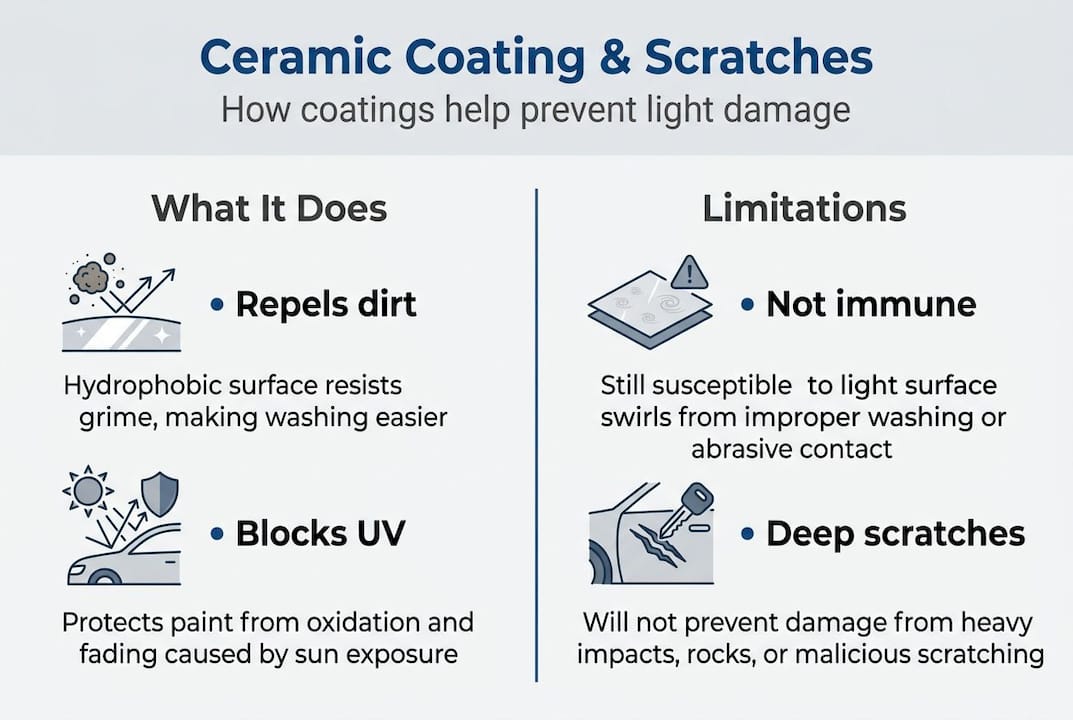
One of the most practical benefits is the hydrophobic effect. A hydrophobic and chemically resistant layer forms on the paint surface, causing water, mud, and road grime to bead up and roll off rather than bond to the paint. This matters for scratch prevention because dirt and debris that stick to your paint act like sandpaper during washing. When contaminants slide off easily, you introduce far fewer micro-scratches during routine cleaning.
Here’s what ceramic coatings actually protect against on a daily basis:
- Swirl marks from improper washing or automatic car washes
- Minor abrasions from light contact with brushes, sleeves, or bags
- Environmental fallout including bird droppings, tree sap, and industrial dust
- UV oxidation that dulls and fades paint over time
- Water spots and mineral deposits from San Diego’s hard water
- Light scratches from normal driving conditions
The key word throughout that list is light. Ceramic coatings reduce the frequency and severity of surface-level damage. They do not create an impenetrable shield. Think of the coating as a sacrificial layer: it absorbs minor impacts so your actual paint doesn’t have to. That’s a genuinely valuable function, but it operates within a defined range of protection.
For San Diego drivers specifically, this matters because the local environment is tough on paint. Intense UV exposure, coastal salt air, construction dust, and crowded parking lots all create constant low-level threats to your vehicle’s finish. A ceramic coating addresses most of these daily hazards effectively. You can explore more practical guidance on the paint care blog to understand how local conditions interact with your coating over time.
Pro Tip: Before applying any ceramic coating, make sure your paint is properly decontaminated and polished. Coating over existing swirls or scratches locks them in permanently. A clean, corrected surface is the foundation for maximum protection.
Understanding scratch resistance vs. scratch immunity
With a basic overview of how ceramic coatings function, it’s important to clarify what they can (and can’t) protect your car from.
Scratch resistance and scratch immunity are not the same thing, and the difference matters enormously when you’re deciding how to protect your vehicle. Scratch resistance means the surface is harder and more resilient than bare paint, so minor contact is less likely to leave a mark. Scratch immunity would mean no scratch can penetrate the surface at all. No coating currently available, including ceramic, achieves true immunity.
Ceramic coatings reduce micro-scratches and defend against minor abrasions, but not deep scratches. Here’s how different types of damage break down:
- Swirl marks: Caused by circular washing motions or dirty cloths. Ceramic coatings handle these well.
- Micro-scratches: Superficial marks from light contact. Coatings significantly reduce these.
- Key scratches: Deep, deliberate cuts through the clear coat and into the paint layer. Ceramic coatings provide zero protection against this.
- Rock chips: High-velocity impacts from road debris. These penetrate most coatings.
- Door ding scratches: Moderate-depth marks from parking lot contact. Results vary based on impact force.
The table below shows how common paint protection methods compare for scratch resistance:
| Protection method | Scratch resistance | Durability | Hydrophobic effect | Cost range |
|---|---|---|---|---|
| Carnauba wax | Low | 1-3 months | Moderate | Low |
| Paint sealant | Moderate | 6-12 months | Good | Low-moderate |
| Ceramic coating | High | 2-5 years | Excellent | Moderate-high |
| Paint protection film (PPF) | Very high | 5-10 years | Good | High |
PPF (paint protection film) is the only product that approaches true scratch immunity for deeper impacts, because it uses a thick, flexible urethane layer that can actually absorb and self-heal from certain scratches. Ceramic coating and PPF are often used together for maximum defense.
“Ceramic coatings are an excellent first line of defense against everyday surface damage, but they work best when paired with smart maintenance habits and realistic expectations about what any coating can achieve.”
This is also where automotive paint correction becomes relevant. If your paint already has scratches before coating, correction removes them first. Applying a ceramic coating over corrected paint gives you the cleanest, most protected finish possible. The two services work together as a system, not as independent options.
Real-world results: How well do ceramic coatings perform in San Diego?
Now that the differences in levels of protection are clear, let’s examine how ceramic coatings stand up to San Diego’s unique driving conditions and what owners are actually experiencing.
Ceramic coating in San Diego helps prevent light scratches from washing and day-to-day driving, according to consistent customer feedback. That’s a meaningful real-world result, especially given how San Diego’s environment creates specific, ongoing threats to vehicle paint.
Local conditions that increase scratch risk include:
- Intense UV exposure: San Diego averages over 266 sunny days per year. UV rays degrade unprotected clear coat, making it softer and more vulnerable to scratching.
- Coastal salt air: Salt accelerates surface oxidation and can weaken paint over time.
- Construction zones: Fine concrete and metal dust are abrasive and settle on paint surfaces throughout the county.
- Crowded parking: Tight urban parking in areas like downtown San Diego and Mission Valley increases door ding and cart scratch risk.
- Dry, dusty conditions: Inland areas like El Cajon and Santee see heavy dust accumulation that can scratch paint during dry wipe-downs.
The table below reflects typical customer-reported outcomes before and after ceramic coating application:
| Damage type | Before coating (frequency) | After coating (frequency) | Improvement noted |
|---|---|---|---|
| Swirl marks after washing | Frequent | Rare | Significant |
| Water spots | Regular | Minimal | Strong |
| Light surface scratches | Occasional | Reduced | Moderate |
| Bird dropping etching | Common | Reduced | Moderate |
| Deep scratches | Rare | Rare | No change |
Ceramic coatings are especially advantageous in sun-exposed regions such as San Diego, where UV degradation is a primary threat to paint longevity. A properly applied coating adds a UV-blocking barrier that preserves your clear coat’s hardness, which directly supports scratch resistance over time.
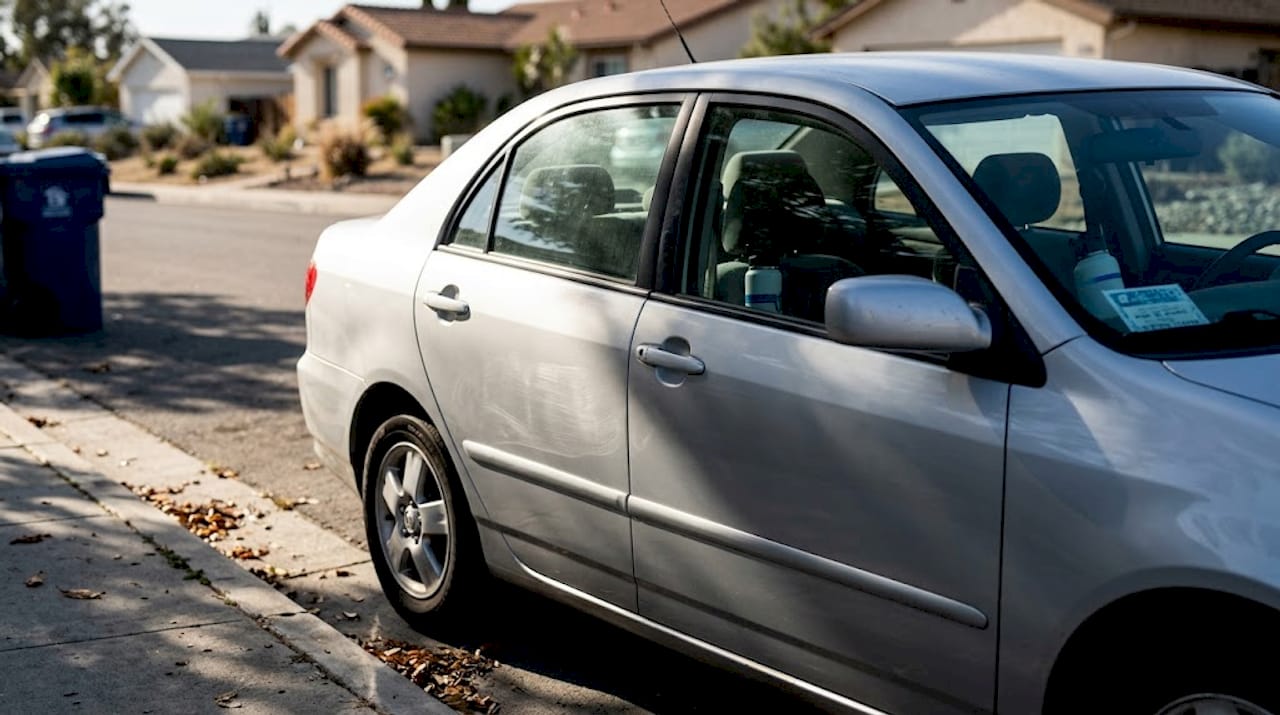
The honest limitation is this: ceramic coatings do not prevent parking lot incidents, road debris impacts, or intentional damage. They reduce the consequence of minor contact, but they cannot change the physics of a sharp object meeting your paint at force. Knowing this helps you plan a complete protection strategy rather than relying on coating alone.
Maximizing scratch protection: Maintenance and professional tips
Armed with evidence of how ceramic coatings perform, the next step is understanding how to get the most scratch resistance through proper aftercare.
Proper maintenance is crucial for ensuring ongoing scratch resistance after ceramic coating application. The coating itself is durable, but how you care for it determines how long it performs at its best.
Here’s a numbered checklist for maximizing protection year-round:
- Wash with the two-bucket method. Use one bucket for clean soapy water and one for rinsing your mitt. This prevents dirty water from being dragged across your paint.
- Use a pH-neutral car wash soap. Harsh detergents strip the coating’s hydrophobic layer faster.
- Dry with a clean microfiber towel. Never use old rags or paper towels, which introduce micro-scratches.
- Avoid automatic car washes. Brush-style car washes are one of the leading causes of swirl marks on coated vehicles.
- Remove contaminants promptly. Bird droppings and tree sap are acidic. Left too long, they etch through the coating into the paint.
- Apply a ceramic coating booster every 6 months. These spray-on products refresh the hydrophobic layer and extend protection.
- Schedule a professional inspection annually. A detailing professional can spot early coating failure and address it before damage reaches your paint.
Common mistakes that reduce scratch resistance include using dirty wash mitts, wiping a dusty car dry without rinsing first, and using all-purpose cleaners on coated surfaces. Each of these habits gradually degrades the coating’s hardness and hydrophobic performance.
For ongoing guidance, reviewing maintenance tips for ceramic coatings gives you a detailed breakdown of what causes premature coating failure. You can also explore top ceramic coating services to understand what professional-grade application looks like versus DIY options.
Pro Tip: In San Diego’s sunny climate, park in shaded areas or use a car cover whenever possible. UV exposure is the single biggest factor that degrades coating performance over time, and shade costs nothing.
When ceramic coating isn’t enough: Advanced solutions for deeper scratches
Even with the best care, certain types of scratches may still occur. Here’s what to do when ceramic coating reaches its limits.
Deeper scratches and paint damage often require professional paint correction or physical restoration. This is not a failure of your coating. It simply means the impact exceeded what any surface-level protection can absorb.
Here’s how to tell when you need more than a ceramic coating can offer:
- You can feel the scratch with your fingernail. If the scratch catches your nail, it has penetrated the clear coat and likely reached the base coat or primer.
- The scratch shows color. White or gray marks on a dark car indicate the clear coat has been cut through.
- The area looks dull or hazy. This suggests paint oxidation or deep abrasion that polishing alone won’t fix.
- The scratch doesn’t improve after washing. Light swirls often diminish after a proper wash and dry. Persistent marks need professional attention.
Your options for deeper damage include:
- Paint correction: A multi-stage machine polishing process that removes scratches from the clear coat layer. This is the most common solution for moderate damage and restores gloss significantly.
- Spot repair: For isolated deep scratches, a professional can apply touch-up paint and blend it carefully into the surrounding panel.
- Paint protection film (PPF): Applied after correction, PPF provides a thick physical barrier that self-heals from light scratches and resists deeper impacts far better than coating alone.
- Full panel respray: For severe damage, a professional body shop respray may be the only option to restore the finish completely.
The smart approach is to use paint correction services to restore the paint first, then apply ceramic coating on top of the corrected surface. This sequence gives you the best possible starting point and the strongest ongoing protection. For a full breakdown of what the application process involves, reviewing professional coating details helps you understand what to expect from a quality service.
Our perspective: What most car owners get wrong about ceramic coating and scratches
It’s clear what ceramic coating can and cannot do for your car. Here’s a perspective you rarely hear from an experienced San Diego detailing professional.
The biggest mistake we see is not choosing the wrong product. It’s building the wrong expectations. When car owners believe ceramic coating is a scratch-proof shield, they stop being careful. They run their car through automatic washes, wipe dust off dry, and park without thought. Then they’re surprised when swirls appear. The coating didn’t fail. The habits did.
Ceramic coating’s real value is in stacking layers of defense. The coating handles daily chemical and UV threats. Smart washing habits prevent micro-scratches. Prompt contaminant removal stops etching. Periodic professional detailing catches problems early. No single layer does everything. The system does.
From our experience working with San Diego drivers, the vehicles that stay in the best condition years after coating are always the ones owned by people who stayed engaged with their car’s care. The coating bought them more margin for error, and they used that margin wisely.
The most missed insight is that combining expert ROI insights with paint correction before coating delivers results that far exceed coating alone. Corrected paint plus ceramic coating is genuinely transformative for a vehicle’s long-term finish. Coating over uncorrected paint just preserves the damage.
Informed expectations and proactive habits are what separate car owners who are happy with their coating investment from those who feel let down by it.
Protect your car: Next steps with San Diego’s experts
With the facts and expert guidance in hand, here’s how you can take the next step toward scratch protection and lasting shine.
At Severin Detailing, we specialize in professional ceramic coating in San Diego and deliver every service directly to your home or office across San Diego County. Our team evaluates your vehicle’s current paint condition, recommends the right level of preparation, and applies professional-grade coatings that are built to last.

If your vehicle already has scratches or swirl marks, our paint correction services restore your finish before coating, so you’re protecting a surface that looks its best. We hold a 5.0 rating on Google because we treat every vehicle with the same meticulous attention to detail. Whether you need a full correction and coating package or a maintenance detail to keep your existing coating performing well, we’re ready to help. Book a detail today and get a fast appointment confirmation from our team.
Frequently asked questions
Will ceramic coating protect my car from all types of scratches?
Ceramic coatings improve resistance to minor abrasions but do not stop deep or severe scratches. They are most effective against swirl marks, micro-scratches, and light surface contact from daily driving.
How long does ceramic coating’s scratch resistance last?
Durability and scratch protection last 2 to 5 years with the right maintenance, though San Diego’s UV exposure can shorten that range without proper care and periodic coating boosters.
What should I do if my car gets scratched after ceramic coating?
Light scratches may respond to professional detailing and light polishing, while deeper marks require paint correction to restore the clear coat before any recoating is applied.
Can I improve scratch resistance after ceramic coating application?
Proper maintenance is key for lasting scratch resistance. Regular two-bucket washing, avoiding automatic car washes, and applying a coating booster every six months all help maintain the coating’s protective performance.