How long ceramic coating lasts in San Diego: key facts
How long ceramic coating lasts in San Diego: key facts
TL;DR:
- In San Diego, environmental factors like UV and salt significantly shorten ceramic coating lifespan.
- Proper maintenance and professional application are crucial for maximizing coating durability in coastal climates.
- Typical ceramic coatings last 2 to 4 years in San Diego, less than manufacturer claims suggest.
Ceramic coating manufacturers often advertise lifespans of five to ten years, and that sounds reassuring until you factor in where you actually live. San Diego’s intense UV exposure, coastal salt air, and shifting microclimates create conditions that routinely push coatings toward the lower end of any published range. If your vehicle sits outside in Mission Beach or Chula Vista, the rules are different than for someone in a mild inland suburb. This article breaks down exactly what drives ceramic coating longevity, how San Diego’s environment stacks the deck, and what you can do to protect your investment for as long as possible.
Table of Contents
- Why ceramic coating lifespans vary
- San Diego’s climate: What makes it unique
- Maintenance myths and must-dos for maximum lifespan
- Ceramic coating vs. other protection methods in San Diego
- Our perspective: What actually works for San Diego car owners
- Get lasting ceramic protection for your San Diego vehicle
- Frequently asked questions
Key Takeaways
| Point | Details |
|---|---|
| Local climate matters | San Diego’s sun and salty air can shorten ceramic coating life compared to nationwide claims. |
| Maintenance is critical | Routine washing and checkups help coatings last their longest in coastal environments. |
| Coatings vs alternatives | Ceramic coatings generally outlast waxes and sealants but need proper care for full benefit. |
| Pro application advised | Professional ceramic coating offers better longevity in tough climates than DIY methods. |
Why ceramic coating lifespans vary
To understand how coatings perform in San Diego, let’s look at what really drives their longevity.
Not all ceramic coatings are created equal. Consumer-grade products sold in auto parts stores typically contain lower concentrations of silicon dioxide (SiO2), the active compound that bonds to your paint and forms a hard, hydrophobic layer. Professional-grade coatings use higher SiO2 concentrations and require controlled application conditions to cure properly. The difference in real-world lifespan between a DIY kit and a professionally applied coating can be two to four years.
Environmental stress is the other major variable. UV radiation breaks down the chemical bonds in a coating over time, while salt deposits from ocean air accelerate surface degradation. Temperature swings between coastal mornings and inland afternoons cause the coating to expand and contract repeatedly, which gradually weakens adhesion. As noted in ceramic coating durability factors, longevity is affected by climate and maintenance just as much as the product itself.
Application preparation matters enormously. A coating applied over contaminated or unpolished paint will not bond correctly, shortening its effective life regardless of product quality. Paint decontamination and paint correction before application are not optional steps; they are the foundation that determines how well the coating performs. You can explore the full process in our ceramic coating guide.
Top factors that impact ceramic coating lifespan:
- SiO2 concentration in the product
- Surface preparation quality before application
- UV exposure intensity and duration
- Salt and ocean air contact frequency
- Wash frequency and technique
- Parking conditions (garage vs. open air)
- Product curing time and temperature at application
“Ceramic coatings can deliver excellent protection, but real-world lifespan depends heavily on environmental conditions and how consistently the vehicle is maintained after application.” — Industry detailing professionals
Pro Tip: Your wash technique can extend or shorten coating life significantly. Always use a pH-neutral car wash soap, a clean microfiber wash mitt, and the two-bucket method. Automatic car washes with brushes are one of the fastest ways to degrade a ceramic coating prematurely.
San Diego’s climate: What makes it unique
Once you know the general factors, it’s time to see why San Diego’s environment makes things different.
San Diego averages roughly 266 sunny days per year. That sounds like paradise for drivers, but sustained UV exposure is one of the primary enemies of any protective coating. The UV index in San Diego regularly reaches 8 to 10 during summer months, which is classified as very high to extreme. This level of radiation accelerates oxidation of the coating’s surface layer faster than in less sunny regions.
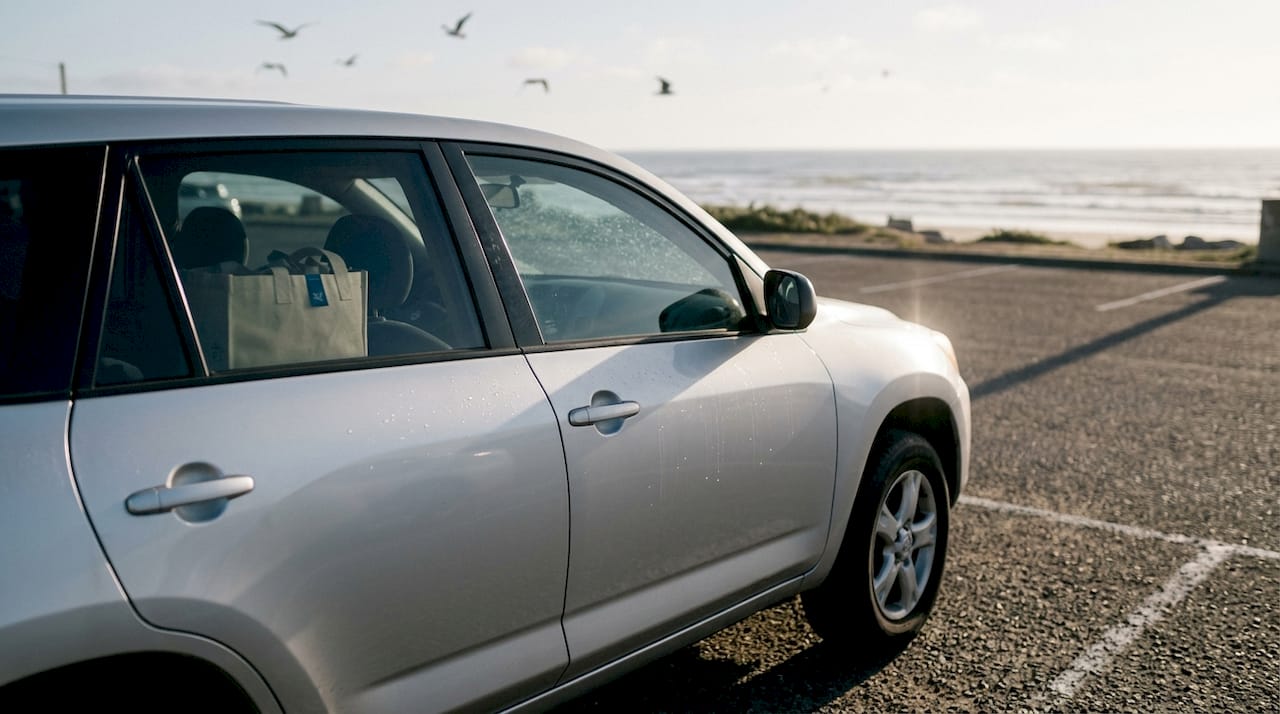
Coastal salt exposure adds another layer of stress. Vehicles parked within a few miles of the Pacific Ocean collect fine salt particles on their surfaces daily. Salt is corrosive and hygroscopic, meaning it attracts and holds moisture against your paint. Sunlight intensity and coastal salt exposure are documented factors that reduce paint and coating lifespans measurably.
San Diego also has distinct microclimates. A vehicle in La Jolla faces heavier marine layer and salt air than one in El Cajon, which instead deals with higher heat and drier conditions that cause thermal stress. Neither environment is gentle on a coating.
Average ceramic coating lifespan: manufacturer claims vs. San Diego reality
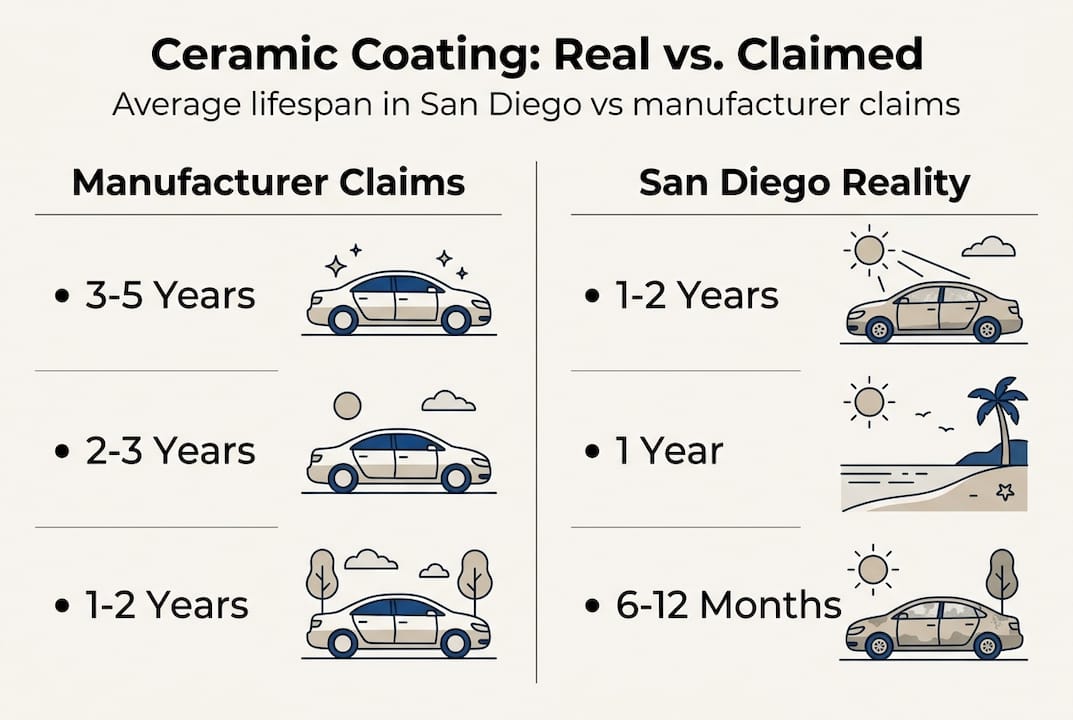
| Coating type | Manufacturer claim | Observed San Diego range |
|---|---|---|
| Consumer DIY kit | 1 to 2 years | 6 to 12 months |
| Entry-level professional | 2 to 3 years | 1 to 2 years |
| Mid-grade professional | 3 to 5 years | 2 to 3 years |
| Premium professional | 5 to 10 years | 3 to 5 years |
The gap between claims and reality is consistent. Coastal UV and salt exposure simply accelerate wear. Signs that your coating is breaking down ahead of schedule include water no longer beading cleanly on the surface, a dull or hazy finish replacing the original gloss, and a rough texture when you run a clean hand across the paint. Catching these signs early allows you to address them before bare paint is exposed. Our exterior detailing tips cover how to assess and maintain your vehicle’s surface between coating cycles.
Maintenance myths and must-dos for maximum lifespan
Knowing the climate is one thing. Let’s dispel some common myths and cover practical steps.
The most damaging myth about ceramic coatings is that they are “set and forget.” A coating is not a permanent shield that requires zero effort. It is a durable protective layer that needs consistent care to perform at its best. Neglecting maintenance does not just reduce gloss; it actively shortens the coating’s functional lifespan by allowing contaminants to accumulate and chemically bond to the surface.
Another common misconception is that any car wash soap will do. Harsh detergents and degreasers strip away the hydrophobic properties of the coating faster than normal wear. Proper washing and regular maintenance are well-documented methods for extending coating effectiveness. This is especially true in San Diego, where salt and road grime accumulate quickly.
Routine maintenance checklist for San Diego drivers:
- Wash your vehicle every one to two weeks using a pH-neutral soap
- Rinse thoroughly after beach trips or driving near the coast
- Apply a ceramic coating booster spray every three to four months
- Inspect the surface for water beading behavior after each wash
- Decontaminate with an iron remover every six months
- Avoid parking under trees that drop sap or bird activity areas
- Schedule a professional inspection annually to assess coating condition
Pro Tip: After a beach trip or a drive through a coastal area, rinse your vehicle as soon as possible, even with plain water. Salt left sitting on the surface overnight works against your coating and your paint. A quick rinse takes two minutes and can add months to your coating’s life.
Consistent maintenance also protects the paint underneath. If a coating fails and bare paint is exposed to San Diego’s UV and salt environment, you may need paint correction before reapplication, which adds time and cost. Staying ahead of degradation through a full car detailing guide approach is always more cost-effective than reactive repairs.
Ceramic coating vs. other protection methods in San Diego
But is ceramic coating always your best bet? Here’s how it compares to other options.
Wax, paint sealants, and ceramic coatings each offer a different level of protection. In San Diego’s demanding climate, the differences between them are more pronounced than in milder regions. Understanding where each method excels helps you make a smarter decision for your specific situation.
Comparison of protection methods for San Diego vehicles:
| Protection type | Expected lifespan | UV resistance | Salt resistance | Approximate cost |
|---|---|---|---|---|
| Carnauba wax | 1 to 3 months | Low | Low | $20 to $60 DIY |
| Synthetic sealant | 6 to 12 months | Moderate | Moderate | $50 to $150 DIY |
| Entry professional ceramic | 1 to 2 years | High | High | $300 to $700 |
| Premium professional ceramic | 3 to 5 years | Very high | Very high | $700 to $2,000+ |
As ceramic coatings outperform waxes and sealants in both durability and protection, the investment tends to pay off for San Diego owners who park outdoors regularly.
When each method may make sense:
- Carnauba wax: Best for garaged vehicles driven occasionally, or as a short-term refresh between professional services
- Synthetic sealant: A reasonable option for budget-conscious owners who commit to reapplication every six months
- Entry-level ceramic: Good for daily drivers that see moderate coastal exposure and have consistent maintenance routines
- Premium ceramic: The strongest choice for vehicles parked outdoors near the coast, driven frequently, or owned by those who want maximum protection with minimal reapplication frequency
Some San Diego owners layer methods, applying a ceramic coating booster or sealant on top of an existing ceramic coating to extend its life between full reapplications. This is a legitimate strategy when done with compatible products. Explore your mobile detailing options to find a service approach that fits your vehicle and schedule.
Our perspective: What actually works for San Diego car owners
Now that you understand the science and comparisons, here’s what we’ve learned from years of detailing in San Diego.
Manufacturer lifespan claims are tested in controlled environments, not on a car parked two blocks from the Pacific Ocean in July. We see vehicles regularly where a “five-year coating” is visibly degrading at the two-year mark, not because the product failed, but because the owner assumed it was maintenance-free.
The most common mistake local owners make is skipping the post-application care routine. The coating does the heavy lifting, but it needs support. Owners who wash consistently, use the right products, and rinse after coastal exposure consistently get more years out of their coating than those who chose a more expensive product but ignored upkeep.
Our honest take: maintenance trumps product choice for most drivers. A mid-grade professional coating that is well-maintained will outlast a premium coating that is neglected. If you want real longevity in San Diego, invest in both the application and the habit of caring for it. Our professional ceramic coating insights reflect exactly what we see on vehicles across the county every week.
Get lasting ceramic protection for your San Diego vehicle
If you want your coating to go the distance, consider an expert application and local support.
At Severin Detailing, we apply professional-grade ceramic coatings with full surface preparation, including paint decontamination and correction, so your coating bonds correctly from day one. We understand San Diego’s microclimates and tailor our recommendations to where you live and how you drive.

We come to your home or office across San Diego County, making the process as convenient as it is thorough. Whether you are ready to book a detail or want to learn more about our ceramic coating service, we are here to help you protect your vehicle with confidence. Rated 5.0 on Google, our team delivers results you can see and feel.
Frequently asked questions
How many years can I expect my ceramic coating to last in San Diego?
Most real-world results in San Diego show ceramic coatings last 2 to 4 years, depending on quality, application method, and how consistently the vehicle is maintained. Coatings can last 2 to 5 years under typical conditions, but sun and ocean air reliably shorten that range locally.
Does San Diego’s salty air affect ceramic coating lifespan?
Yes, salt from the ocean accumulates on your vehicle’s surface and accelerates coating degradation if not regularly washed off. Coastal air and salt are recognized factors that break down paint protection coatings faster than inland conditions.
Can I apply ceramic coating myself or should I use a pro in San Diego?
Professional application consistently yields longer-lasting results, especially given San Diego’s climate challenges. Professional ceramic coatings offer higher durability and protection compared to DIY versions because of proper surface prep and controlled curing.
How can I tell when my ceramic coating needs reapplication?
If water stops beading on the surface, the finish looks dull or hazy, or the paint feels rough to the touch, it is likely time for reapplication. A failing hydrophobic effect and loss of gloss are the clearest indicators that your coating has reached the end of its effective life.
