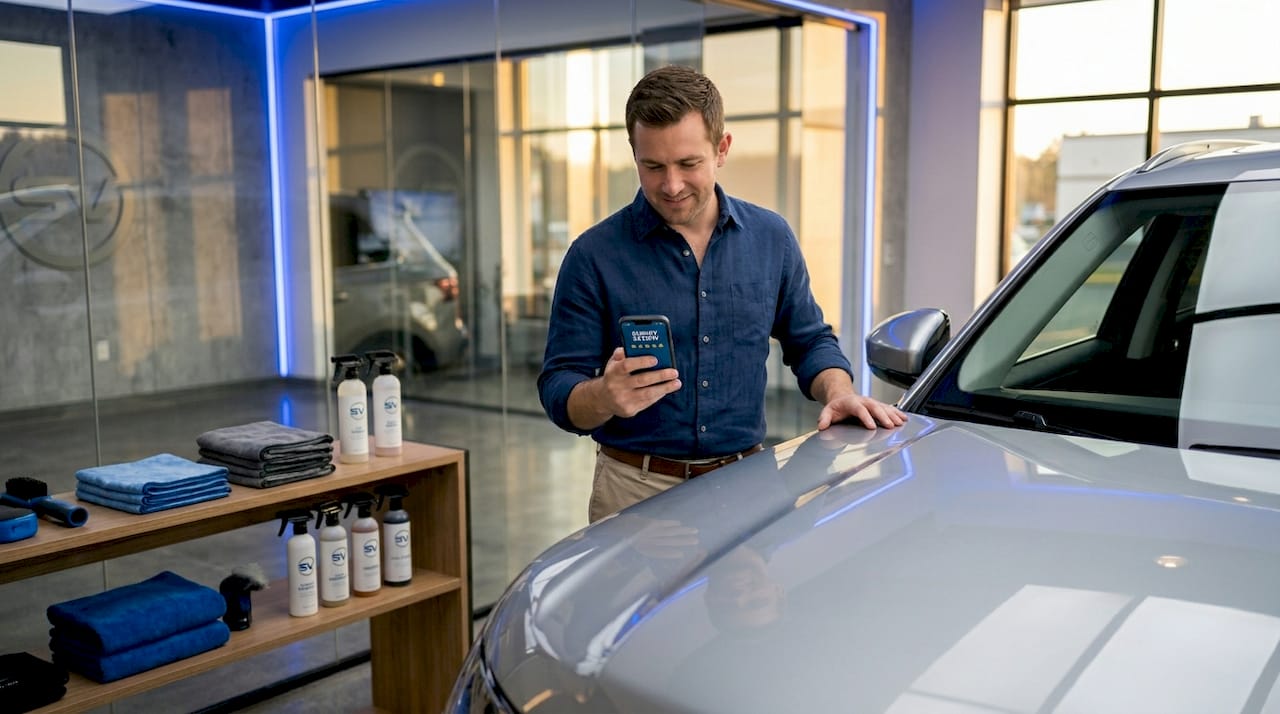
What Is Customer Satisfaction in Detailing?
What Is Customer Satisfaction in Detailing?
TL;DR:
- Customer satisfaction in detailing is measured by how well the service meets or exceeds vehicle owners’ expectations in quality, communication, and value. It is primarily assessed through CSAT scores, which reflect transaction-specific experiences and are influenced by transparency, responsiveness, and clear timelines. Effective communication and appropriate timing of upsells significantly enhance overall satisfaction and trust in the service.
Customer satisfaction in detailing is defined as the degree to which a vehicle owner feels their auto detailing service met or exceeded their expectations in quality, communication, and value. The industry term for measuring this is the Customer Satisfaction Score, or CSAT, calculated as the number of satisfied customers divided by total responses, multiplied by 100. Unlike Net Promoter Score (NPS), which tracks long-term loyalty, or Customer Effort Score (CES), which measures how easy a service was to use, CSAT captures how a specific interaction landed. For vehicle owners in San Diego and beyond, understanding what drives that score gives you real power to choose better services and get more from every appointment.
What is customer satisfaction in detailing services?
Customer satisfaction in car detailing is the gap between what you expected when you booked the service and what you actually received when you picked up your vehicle. According to YouGov research on satisfaction measurement, satisfaction rises when the service experience confirms or exceeds customer expectations, and even technically excellent work can receive poor ratings when those expectations go unmet. That finding matters because it shifts the definition of “good detailing” beyond clean paint and spotless interiors.
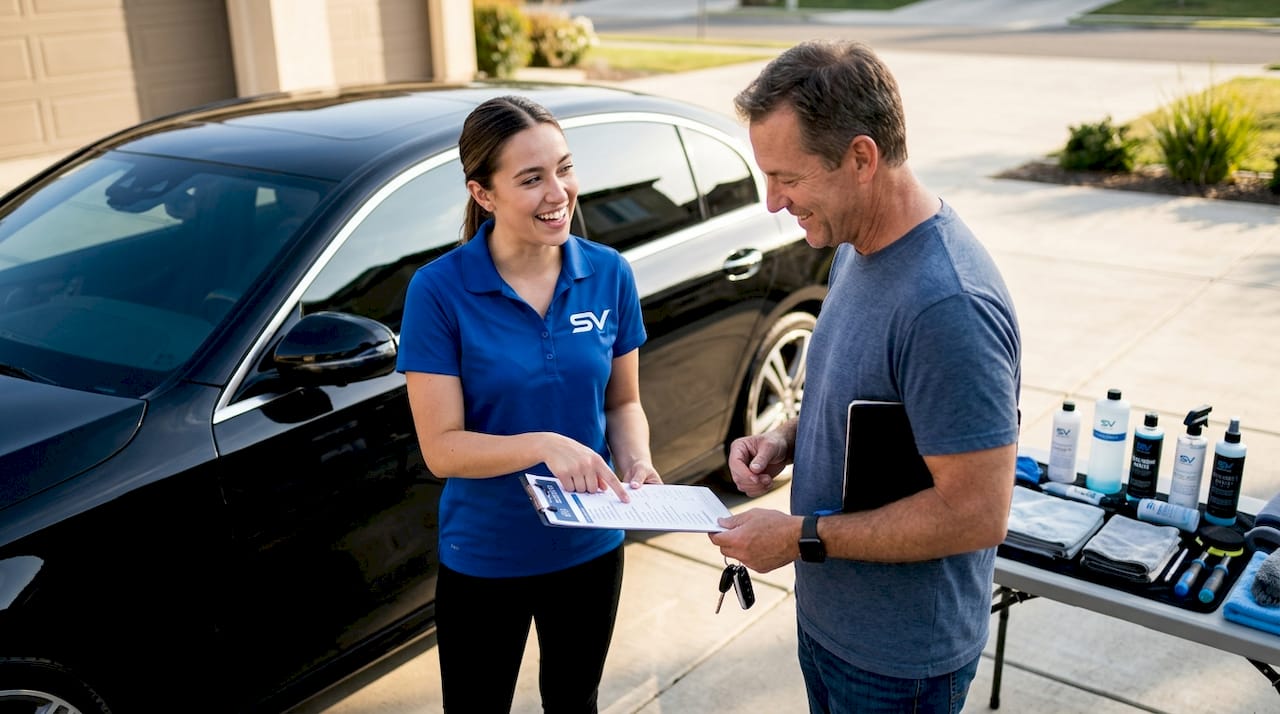
The importance of satisfaction in detailing goes further than a five-star Google review. Satisfied customers book again, refer friends, and become the kind of long-term clients that sustain a detailing business. Dissatisfied customers, even those who say nothing at the time, rarely return. For you as a vehicle owner, recognizing what satisfaction actually means helps you evaluate whether a detailer is truly delivering value or just delivering a clean car.
Zendesk’s customer satisfaction research confirms that the experience layer, meaning communication, transparency, and responsiveness, is as critical to satisfaction as the physical cleaning quality itself. A detailer who does flawless paint correction but never updates you during an eight-hour job creates a very different satisfaction outcome than one who delivers the same result with regular check-ins. Both vehicles look identical at pickup. The experiences are not.
What factors influence customer satisfaction in detailing services?
Several distinct factors shape how satisfied you feel after a detailing appointment. Quality of outcome is the most obvious, but it is far from the only one. The 2026 detailing industry analysis from RepuClinic’s professional detailing trends report identifies responsiveness, reputation management, and operational consistency as the primary drivers of which shops customers choose and recommend. That combination tells you something important: satisfaction begins before the detailer even touches your vehicle.
Here are the core factors that affect detailing customer satisfaction:
- Service quality outcomes. The condition of your paint, interior surfaces, glass, and trim after the job sets the baseline. Services like ceramic coating, paint correction, and thorough interior decontamination each carry specific quality benchmarks that customers compare against their pre-service expectations.
- Communication during the job. Timely updates on progress, delays, or discoveries (such as deeper paint damage found during correction) directly affect how you feel about the experience, regardless of the final result.
- Operational efficiency. Jobs that run significantly over the quoted time, or that require multiple return visits to fix missed areas, signal poor process control and reduce satisfaction even when the final quality is acceptable.
- Digital presence and pre-service clarity. High-performing detailing shops maintain clear service menus online with accurate descriptions, recent reviews, and transparent pricing. This reduces the expectation gap before you ever arrive.
- Upsell timing and relevance. Add-on offers like exterior protection packages or ceramic coating upgrades are received positively when presented at the right moment. Poorly timed upsells, particularly those made after the job is complete, create friction rather than value.
Pro Tip: Before booking any detailing service, check the shop’s Google review recency, not just the overall star rating. A shop with 200 reviews but none in the past six months may have changed staff or quality standards. Recent reviews reflect current performance.
The auto detailing checklist you receive before or during a service appointment is also a satisfaction signal in itself. Detailers who document what they plan to do, and then confirm what they completed, give you a concrete reference point for evaluating the outcome. That transparency closes the expectation gap before it opens.
How is customer satisfaction measured in detailing?
Measuring customer satisfaction in detailing relies primarily on CSAT surveys, which are short post-service questionnaires asking customers to rate their experience on a numerical or descriptive scale. CSAT is calculated as the percentage of respondents who select a satisfied or very satisfied rating, and it captures transaction-level feedback rather than overall brand sentiment. That specificity makes it the most useful diagnostic tool for detailing businesses and the most informative feedback mechanism for customers who want to communicate their experience accurately.
The three most common satisfaction metrics used in service businesses are:
- CSAT (Customer Satisfaction Score). Measures satisfaction with a specific interaction immediately after it occurs. Best used right after service completion or after a key milestone like post-coating application.
- NPS (Net Promoter Score). Asks how likely you are to recommend the service to others. Measures loyalty rather than transaction satisfaction, so it reflects cumulative experience over time.
- CES (Customer Effort Score). Measures how easy it was to complete the service process, from booking through pickup. High effort scores predict churn even when quality is high.
Using only one of these metrics gives an incomplete picture. A detailer with a high CSAT but low NPS may deliver good individual appointments while failing to build the trust that generates referrals. For you as a customer, knowing which metric a detailer uses to collect feedback tells you how seriously they take service improvement.
| Metric | What it measures | Best timing |
|---|---|---|
| CSAT | Satisfaction with a specific service interaction | Immediately post-service |
| NPS | Likelihood to recommend; overall loyalty | 7 to 14 days post-service |
| CES | Ease of completing the service process | At booking confirmation or pickup |
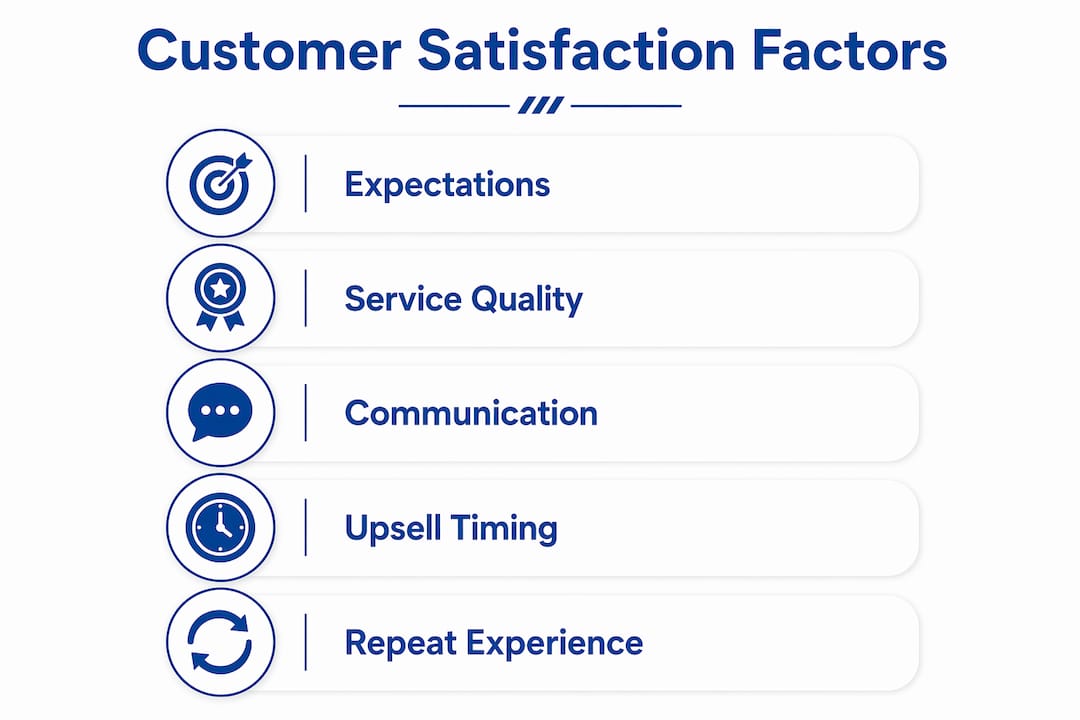
Staggered survey timing improves diagnostic accuracy significantly. Sending a CSAT survey after interior completion and again after exterior or coating work is finished reveals exactly which stage of the job created satisfaction or dissatisfaction. End-of-job surveys alone miss that granularity.
Pro Tip: If a detailer sends you a satisfaction survey, complete it within 24 hours. Your recall of specific details, like whether the technician explained the ceramic coating cure time or whether the interior smelled clean, is sharpest immediately after the appointment. Delayed responses are less useful for both you and the service provider.
How does communication shape your detailing satisfaction?
Communication is the single most controllable factor in detailing satisfaction, and it is the one most frequently mismanaged. Delays and weak communication during a detailing job predict worse satisfaction outcomes. Customers who go eight hours without an update after dropping off their vehicle are significantly more likely to leave terse or negative reviews, even when the final work quality is high. The absence of information creates anxiety, and anxiety creates dissatisfaction.
Practical communication strategies that improve your experience as a vehicle owner include:
- Requesting a mid-job update. Ask your detailer at booking whether they provide progress photos or text updates during the service. A detailer who does this proactively is demonstrating operational maturity.
- Confirming the timeline upfront. Get a specific completion window, not just “a few hours.” If the job involves paint correction or ceramic coating, ask for a stage-by-stage estimate.
- Asking about potential discoveries. Paint correction jobs sometimes reveal deeper scratches or oxidation that require additional time. Knowing this in advance prevents the frustration of an unexpected delay.
- Clarifying the cure process for coatings. Ceramic coatings require a curing period after application. Understanding what you can and cannot do with your vehicle in the 24 to 48 hours post-service prevents accidental damage and the dissatisfaction that follows.
“Customers interpret value as the combination of outcome quality, respect for their time, and management of uncertainty. Over-communication on timelines and possible delays is not excessive. It is the standard.” — 2026 Professional Detailing Trends Analysis
The ceramic coating failure risks that most customers encounter are directly tied to post-service communication gaps. When detailers fail to explain cure requirements clearly, customers inadvertently compromise the coating, then attribute the failure to poor application quality. That misattribution damages satisfaction and trust. Clear communication at every stage prevents it.
Operational efficiency and clear communication during job execution directly improve repeat bookings, referrals, and positive reviews. Shops that communicate well collect stronger reviews and generate higher revenue per technician hour. For you, that correlation is a reliable quality signal when choosing between detailers.
How do value perception and upsell timing affect satisfaction?
Value in detailing is not simply the ratio of price to cleaning quality. Customers interpret value as a combination of three things: the quality of the physical outcome, respect for their time, and how well the detailer managed uncertainty throughout the process. A mobile detailing service that comes to your home or office, completes the work on schedule, and communicates clearly delivers higher perceived value than a shop-based service with marginally better paint correction results but poor communication and a two-hour wait beyond the quoted time.
Upsell timing is a specific and often overlooked factor in how satisfied you feel after a detailing appointment. A 2026 survey on upsell receptiveness among car owners found that 67% of car owners are receptive to exterior protection product offers at the showroom or order-finalizing stage, while only 11% respond positively to the same offer made after service completion. That 56-point gap shows that the timing of an offer, not just its content, determines whether it adds to or subtracts from satisfaction.
| Upsell timing | Customer receptiveness | Satisfaction impact |
|---|---|---|
| Before service (at booking) | High | Positive: feels like helpful planning |
| During service (mid-job update) | Moderate to high | Neutral to positive: feels like transparency |
| After service completion | Low (11%) | Negative: feels like pressure or afterthought |
Understanding this as a vehicle owner gives you a useful frame for evaluating detailers. A detailer who mentions ceramic coating or paint protection options during your initial consultation is following best practice. One who brings it up only after completing a basic wash is either poorly trained or prioritizing upsell revenue over your experience.
Pro Tip: When booking a detailing service, ask directly whether the technician will recommend any add-ons before starting the job. This single question signals to the detailer that you expect transparent, upfront communication and filters out shops that rely on post-service pressure tactics.
The drive-through car care model demonstrates how respecting customer time, even in lower-tier service formats, drives loyalty. Premium detailing services that combine high-quality outcomes with time-conscious scheduling and clear communication consistently outperform those that rely on quality alone to generate repeat business.
Key takeaways
Customer satisfaction in detailing is determined by the gap between your expectations and the actual service experience, where communication and transparency matter as much as the physical quality of the work.
| Point | Details |
|---|---|
| Satisfaction is expectation-based | Even excellent detailing work rates poorly when it fails to meet what customers were led to expect. |
| CSAT measures transaction satisfaction | Use CSAT scores alongside NPS and CES for a complete picture of service quality and loyalty. |
| Communication drives outcomes | Timely updates and clear timelines reduce dissatisfaction even when delays occur. |
| Upsell timing is critical | 67% of car owners accept add-on offers before service; only 11% respond positively after completion. |
| Value includes time and transparency | Perceived value combines outcome quality, schedule respect, and proactive communication throughout the job. |
Why the experience layer matters more than most detailers admit
I have seen vehicle owners leave five-star reviews for jobs that were technically average, and one-star reviews for work that was genuinely excellent. The difference was never the paint. It was always the experience surrounding it.
The detailing industry tends to talk about satisfaction in terms of product quality: which ceramic coating brand was used, how many stages of paint correction were performed, whether a hydrophobic layer was properly applied. Those things matter. But they are table stakes. What actually separates a satisfying detailing experience from a frustrating one is whether the detailer treated your time and your uncertainty with the same care they gave your clear coat.
The most common mistake I see vehicle owners make is choosing a detailer based on portfolio photos alone. A stunning before-and-after on Instagram tells you nothing about whether that shop will update you during an eight-hour job, explain the ceramic coating cure process clearly, or handle a discovered scratch with transparency rather than silence. Those are the factors that determine whether you feel good about the experience when you drive away.
My honest advice: ask three questions before booking any premium detailing service. First, how will you communicate with me during the job? Second, when will you mention any add-ons or upgrades? Third, what happens if the job takes longer than quoted? The answers tell you more about likely satisfaction than any review count or star rating.
The vehicle protection plan analogy is useful here. You do not judge a protection plan by its brochure. You judge it by how the provider communicates when something goes wrong. Detailing is the same. The real test of a detailer’s commitment to your satisfaction is not the sunny-day job. It is how they handle the complicated one.
— Dylan
How Severindetailing delivers on customer satisfaction
Severindetailing is built around the principle that your satisfaction depends on more than a clean vehicle. Every mobile detailing appointment in San Diego includes upfront communication on timing, transparent recommendations on services like ceramic coating and paint correction, and progress updates throughout the job. You know what is being done, why it is being done, and what to expect when it is finished.
Whether you are booking a full interior and exterior detail or exploring professional ceramic coating for long-term paint protection, Severindetailing’s process is designed to close the expectation gap before it opens. With a 5.0 Google rating and fully insured mobile service across San Diego County, the standard is consistent. Book your detail today and experience what transparent, professional-grade vehicle care actually feels like.
FAQ
What does customer satisfaction mean in auto detailing?
Customer satisfaction in auto detailing measures how well the service met your expectations in quality, communication, and value. It is formally tracked using CSAT, calculated as satisfied customers divided by total responses, multiplied by 100.
Why does communication affect detailing satisfaction so much?
Customers who receive no updates during a long detailing job are significantly more likely to leave negative reviews, even when the final work quality is high. Managing uncertainty through timely updates is as important as the detailing outcome itself.
What is the difference between CSAT and NPS in detailing?
CSAT measures satisfaction with a specific service interaction immediately after it occurs, while NPS measures how likely you are to recommend the detailer to others over time. Both metrics serve different diagnostic purposes and work best when used together.
When should a detailer mention ceramic coating or add-on services?
Research shows 67% of car owners are receptive to add-on offers before or during service, compared to only 11% after completion. The best detailers raise upgrade options at booking or during a mid-job update, not at pickup.
How can I improve my own detailing experience as a vehicle owner?
Ask your detailer upfront about communication frequency, timeline estimates, and how they handle unexpected discoveries during the job. Completing any post-service CSAT survey within 24 hours also gives the most accurate feedback and helps the detailer improve future appointments.